
Recently, a group of high school students at Long Bay College in New Zealand completed a science project. Taking biomimetic antimicrobial research as their starting point, they set Sharklet microstructures against copper material and filter paper as controls to investigate how different surfaces affect microbial attachment and growth.
Microbial contamination poses a persistent challenge in healthcare and public health. As antimicrobial resistance (AMR) continues to rise globally, intervention alternatives to disinfectants and chemically antimicrobial materials have grown increasingly critical. Biomimetics offers one viable approach: identifying nature-derived solutions that can be engineered for real-world use. This is why the students selected Sharklet micro-structured technology as the focus of their research.
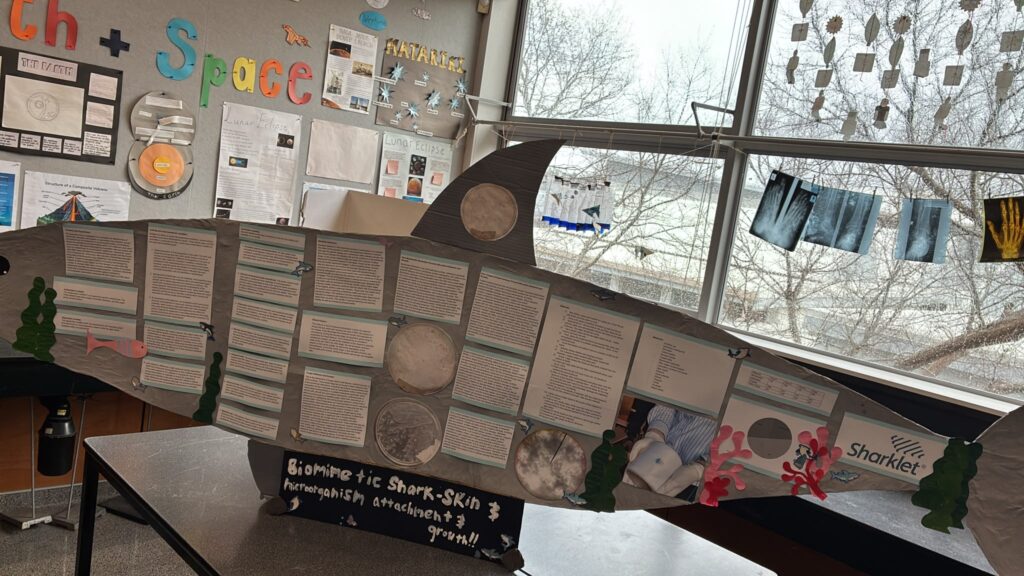
Evolution has yielded countless sophisticated biological adaptations. Sharklet draws its inspiration from marine life. Its inventor, Professor Brennan, observed that shark skin resists fouling by barnacles, algae and other organisms, exhibiting outstanding anti-fouling properties. Unlike chemical antimicrobial approaches that release ions to kill microbes, this physical microstructure functions primarily by limiting microbial attachment and proliferation. In high-touch environments such as hospitals and public facilities, this physical technology complements chemical methods with distinct application strengths.
Biomimetics serves both as a wellspring of technological innovation and an accessible gateway for public science outreach. This student-led investigation required the young researchers to review literature, design controlled experiments and engage in independent critical thinking. Their inquiry into a real-world problem offers a tangible example of how biomimetic science can benefit humanity. It is encouraging to see Sharklet technology featured in classroom learning, and we look forward to seeing further breakthroughs and applications across diverse sectors.
We commend the student team at Long Bay College for their initiative, hard work and dedication to science. Ngā mihi!