
The World Health Organization (WHO) recently released its 2025 Global Antimicrobial Resistance Surveillance Report, warning that resistance to commonly used antibiotics is increasing worldwide and now poses a severe threat to global health.

Widespread Resistance to Common Antibiotics
According to the report, in 2023, one in six confirmed bacterial infections globally was resistant to antibiotic treatment. From 2018 to 2023, resistance to more than 40% of monitored antibiotics increased, with an average annual rise of 5% to 15%. Without urgent action, drug-resistant infections could claim up to 39 million lives by 2050 and lead to an estimated USD 412 billion in annual economic losses.
This latest report is also the first to publish resistance estimates for 22 antibiotics used to treat urinary tract infections, gastrointestinal infections, bloodstream infections, and gonorrhea. It covers eight common bacterial pathogens and highlights Escherichia coli and Klebsiella pneumoniae as the major drug-resistant Gram-negative bacteria found in infections.
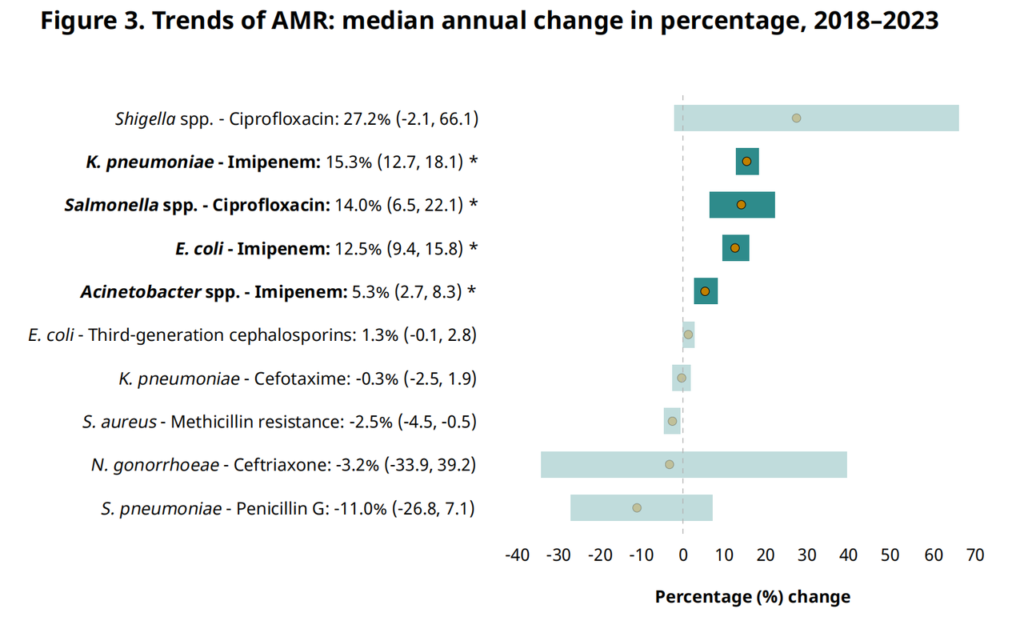
These pathogens frequently cause sepsis, organ failure, and death, representing some of the most serious bacterial infections. Globally, more than 40% of E. coli and over 55% of K. pneumoniae have developed resistance to third-generation cephalosporins—first-line treatment options.
Other essential life-saving antibiotics, including carbapenems and fluoroquinolones, are also losing effectiveness against E. coli, K. pneumoniae, Salmonella, and Acinetobacter. In the face of such escalating threats, preventing the spread of drug-resistant bacteria and reducing hospital-acquired infections has become an urgent priority.
Addressing the Resistance Crisis: The Sharklet Solution
Unlike traditional chemical-based antimicrobial approaches, Sharklet technology uses physical micropattern to block bacterial attachment, proliferation, and transmission. By preventing bacterial infection through a purely physical mechanism—with no use of biocidal chemicals—Sharklet technology does not contribute to the development of new drug-resistant strains. This gives Sharklet an inherent advantage in combating antimicrobial resistance while ensuring safety for human use.
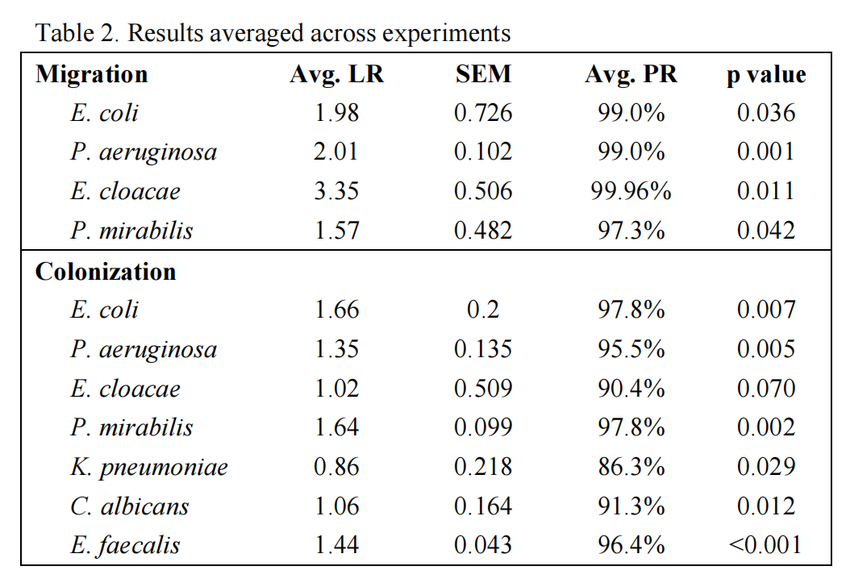
Good Laboratory Practice(GLP)testing has validated Sharklet’s effectiveness against multiple common bacteria and resistant strains. Compared with standard medical materials, Sharklet micropatterned surfaces reduce bacterial migration and colonization—including that of E. coli and K. pneumoniae—by 86% to 99.96% .
The U.S. Public Broadcasting Service (PBS) has previously featured an in-depth report on Sharklet’s technology, showcasing its significant impact in reducing bacterial contamination in medical environments. This highlights Sharklet as a promising new solution in the global fight against antimicrobial resistance.